


Chestnuts are the seed of Castanea sativa, a deciduous tree native to Southern Europe. Nutty, sweet and versatile, they are also delicious to eat. Here’s our handy guide on where, when and how to forage chestnuts.
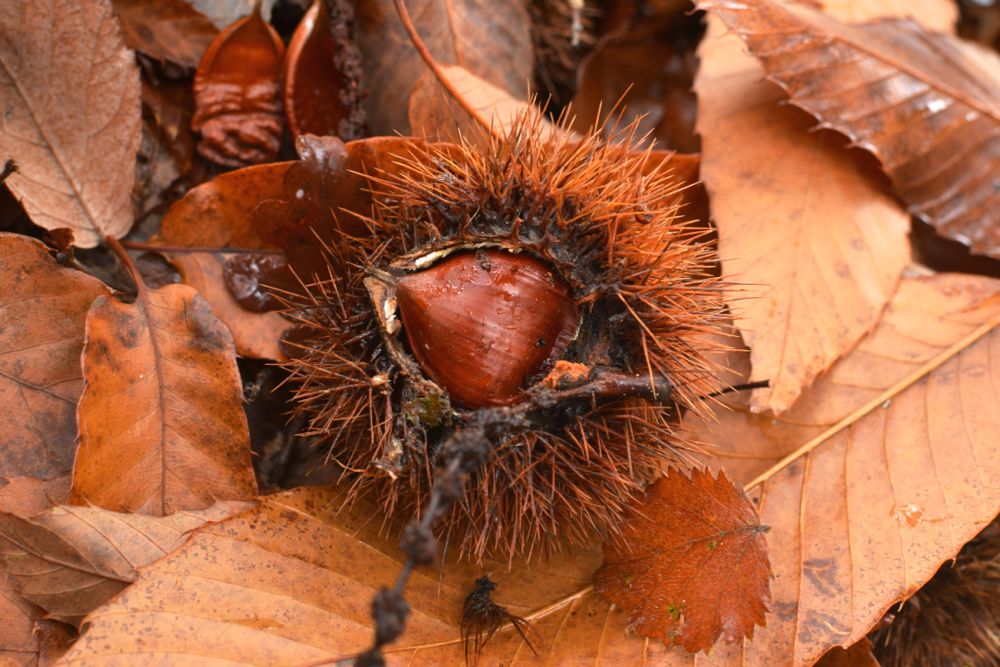
Where to find sweet chestnuts
Sweet chestnut trees are widespread across the Mediterranean area and they like a mild climate with adequate moisture. In the UK, they can be found in parks or planted as an ornamental tree. If you are lucky you may find ripe chestnuts around September/October, if the weather has been good and the squirrels haven’t beaten you to it!
The Cevennes National Park in the South of France is renowned for its sweet chestnut forests. They have such cultural significance that sweet chestnut trees are locally called l’arbre a pain - the tree of bread. Bread made from chestnut flour was a staple of the region.
Classically fire roasted and sold on the street, sweet chestnuts are the perfect snack when you are on the go in winter. But they are also a very versatile ingredient and worth experimenting with.
In Portugal (where we are now) you will find Castanhas for sale at every road side market stall in the autumn winter season. But you can also pick them up for free if you know what to look for...
How to identity a sweet chestnut tree
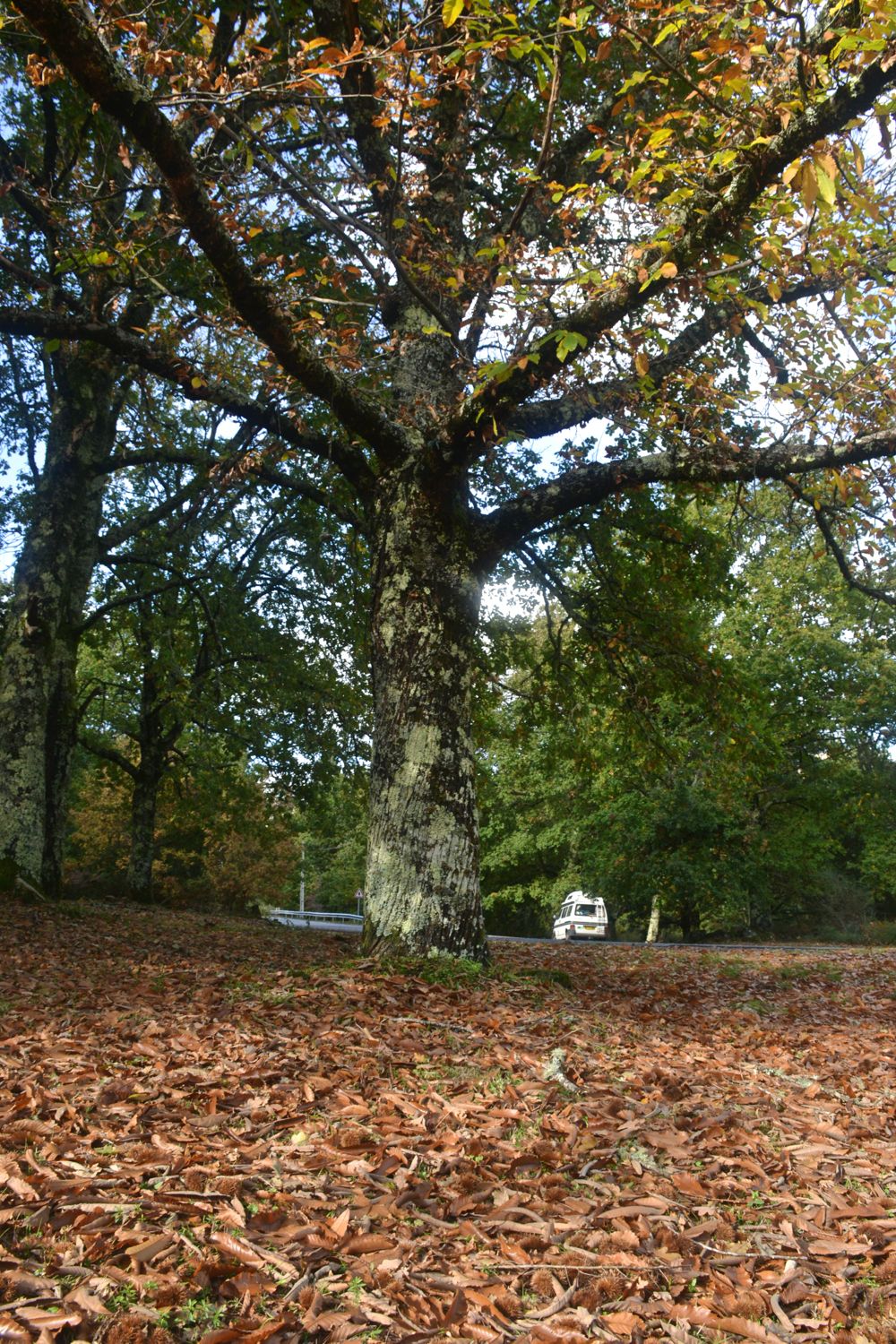
You can recognise a sweet chestnut tree by its distinctive leaves, which are large and have serrated edges. If in autumn the ground underneath is covered in lots of spiky balls, then you’ve definitely found your sweet chestnut tree. The only tree you could possibly confuse it with is the horse chestnut, which has similar looking seeds known as conkers which are not edible. However, the leaves are very different and the husks much less spiky.

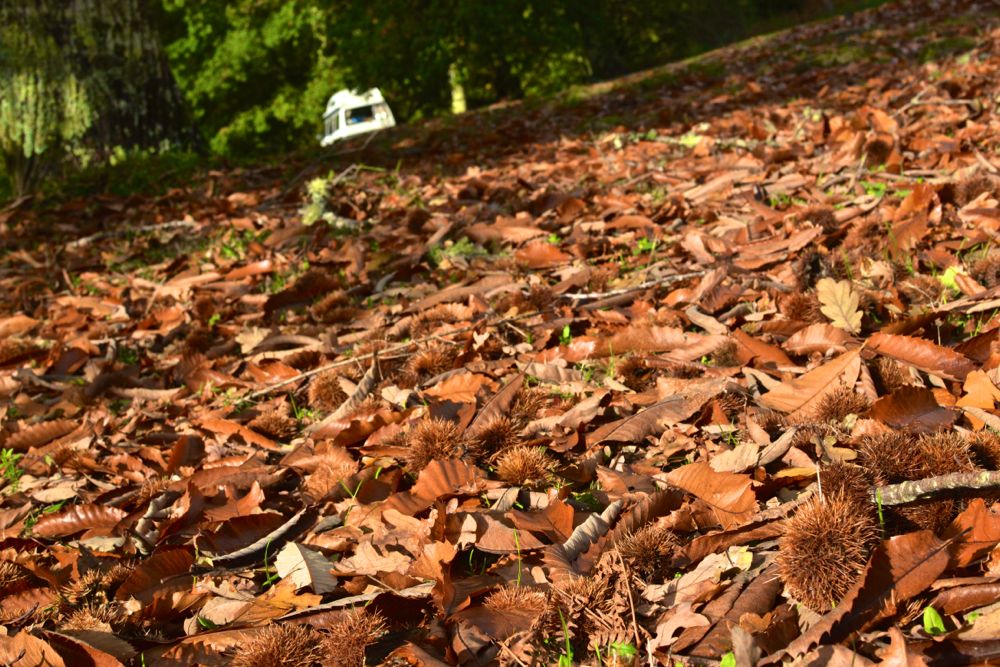
How to harvest chestnuts
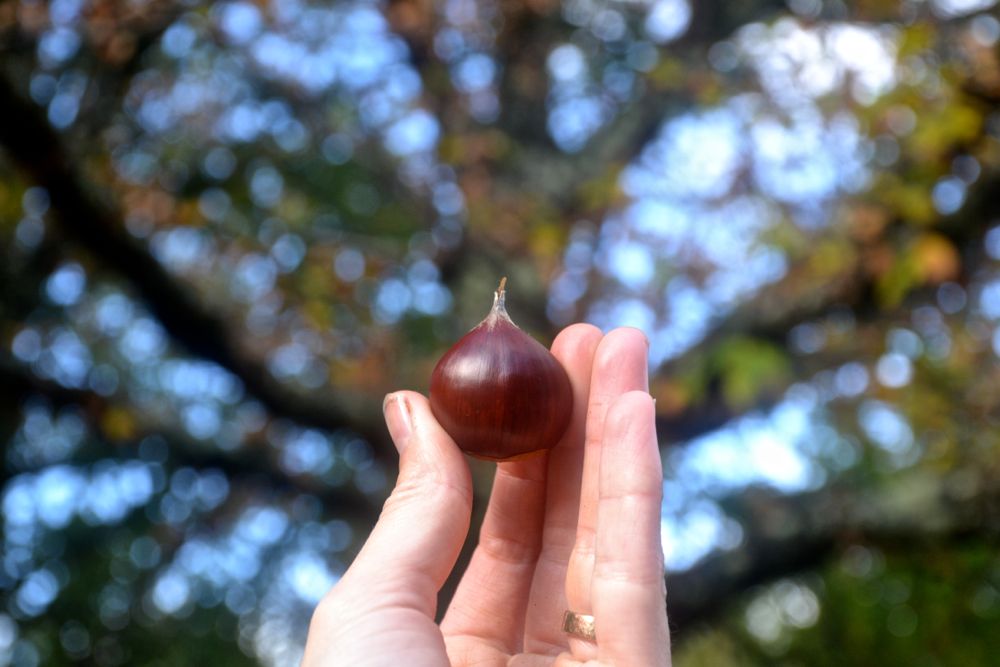
The harvesting season is from September - November, though the season can vary across Europe. The chestnuts are ripe when they fall to the ground. Paul and I have different techniques for removing the nuts from their spiky husks. I roll them around under by boot until they release the chestnuts inside. And Paul pokes them with a stick. 😀 You can also wear a sturdy pair of gloves and just open them with your hands. Discard any nuts that are wrinkled, soft or have holes in.
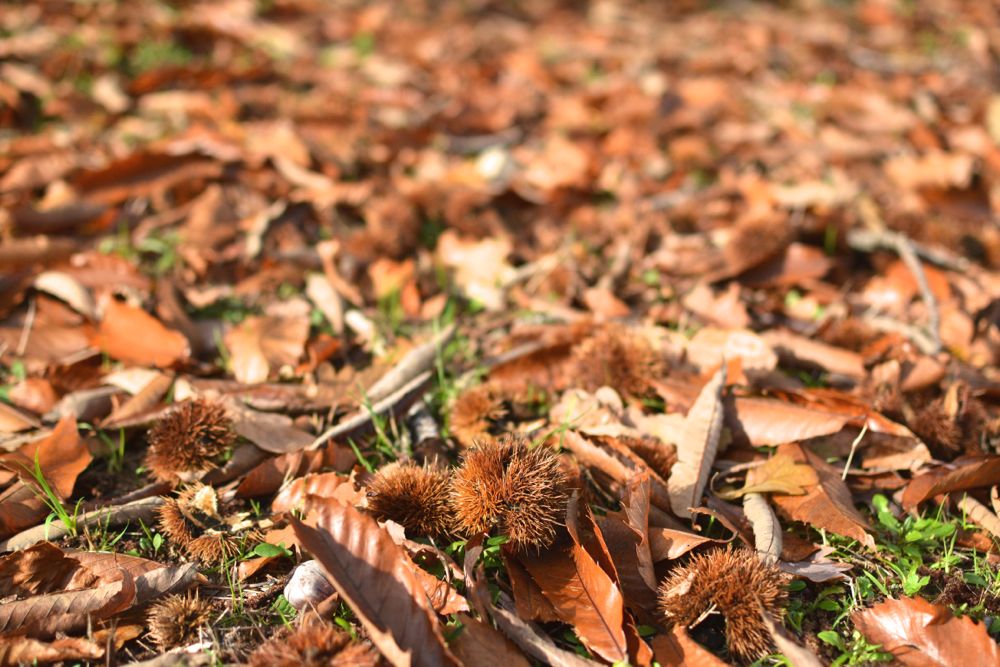

How to cook sweet chestnuts in a pressure cooker
First wash your foraged chestnuts. Then use a sharp knife to score a cross in each chestnut. Traditionally chestnuts are roasted, but in the van we cook them in our pressure cooker. Place in a steamer basket with water below, put the lid on and bring up to high pressure. Then turn the heat down to maintain pressure for 5 minutes. Let the pressure naturally release, then peel your chestnuts whilst still hot. This gives them a crumbly texture. If you would like them sweet and softer, cook them for longer.

What are your favourite recipes with chestnuts?
Leave a Comment & Rating